I have watched founders spend three months polishing product pages, rewriting headlines, obsessing over button radius, then hand the money part to a clunky checkout that looks like it escaped from 2014. Brutal. Nothing humbles a proud ecommerce build faster than a payment form that makes buyers nervous, confused, or bored. In online payment processing, the prettiest cart means nothing if the payment processor coughs at the finish line.
This is why a serious payment gateway comparison matters. Not because payments are glamorous. They are not. They are plumbing. Expensive plumbing, occasionally cursed plumbing, and sometimes the sort of plumbing that floods your support inbox at 2 a.m.
The best online payment processor is the one that fits your business model, your stack, your countries, your retry logic, your fraud risk, and your appetite for developer pain.
Some tools are built for startups that want speed. Others are built for enterprises that speak in risk models, auth rates, and boardroom acronyms.
What actually matters in online payment processing now
You do not need a shiny dashboard and a sales rep with perfect teeth. You need an online payment solution that can accept online payments reliably, support recurring billing if you sell subscriptions, offer local payment methods where your buyers live, and give your team enough control to fix problems before revenue leaks out of the bucket. Stripe talks a lot about unified payments for online and in person commerce, Adyen leans hard into one API across channels, and Checkout.com is pushing acceptance optimization with AI and network data.
That is not marketing fluff alone. Those are the real fault lines in modern payment processing systems.
Then there is the build question. Do you want a fast launch with prebuilt checkout and hosted pages, or a custom online payment platform wired deep into your app, mobile flows, dunning logic, and CRM? I once saw a dev team try to bolt a legacy gateway onto a modern React checkout with duct tape and confidence. Confidence lost.
The best payment processing platform is not just the one with decent fees. It is the one your engineers can actually live with after launch, when refunds pile up, retries misfire, and product wants six new payment methods by Thursday.
How I ranked these payment processing services
- Breadth of online payment services and checkout flexibility
- Strength for ecommerce payment processing and recurring billing
- Developer experience for custom builds and legacy migration
- Fraud, compliance, and operational sanity
- Fit for small business payment processing versus enterprise scale
- Quality of payment gateway solutions for web and mobile
- Global reach, local methods, and payout logic
- Whether the tool feels built for 2026, not embalmed in old merchant services thinking
None of these payment processors is perfect. Some are brilliant for subscriptions and overkill for a tiny shop. Some are ideal for giant merchants and frankly too much machine for a founder selling five products and a dream. That is why this list is opinionated. It is written for businesses choosing an online payment processor for real revenue, not for people collecting logos like Pokémon.
1. Stripe
Direct link: stripe.com/payments
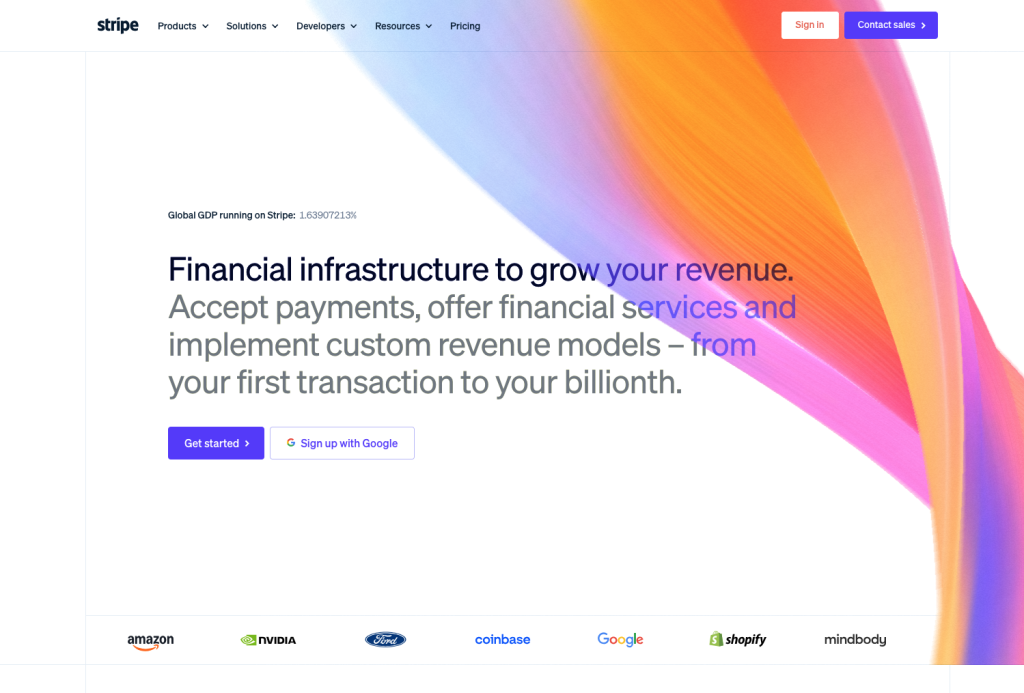
Stripe is still the benchmark for online payment processing if you care about developer velocity, custom checkout UX, subscriptions, and the ability to grow from a scrappy store into something much larger without changing your entire architecture. Stripe says businesses can accept payments online, in person, and globally through a unified payments setup, and its docs cover web, mobile, and no code paths. Standard pricing pages also state there are no setup fees or monthly fees on standard pricing, which matters for startups and lean ecommerce brands trying not to donate cash to software bloat.
Where Stripe wins is not just polish. It is range. You can start with a hosted flow, move into a custom Payment Element, wire in recurring revenue, save payment methods, add mobile support, and still stay inside one ecosystem. For custom builds, Stripe feels like the least likely platform to make your engineers mutter dark things at standup. For legacy migration, it is also forgiving because the docs are rich and the payment flows are modeled clearly through things like Payment Intents. That makes Stripe, for many teams, the best online payment service and the easiest online payment platform to defend in a budget meeting.
2. Adyen
Direct link: adyen.com/online-payments
Adyen is what happens when payment infrastructure puts on a suit, gets very serious, and starts speaking fluent enterprise. The company positions itself as one platform for payments, data insights, and financial products, backed by US, UK, and EU banking licenses, with 99.999 percent historical platform uptime. Its online payments stack supports web, iOS, Android, React Native, and Flutter, plus localized checkout and recurring billing. That is an extremely strong hand if you run a large operation across markets and channels.
Adyen shines when your online payment systems stop being simple. Multi market commerce, local methods, mobile apps, omnichannel retail, subscriptions, platform payouts, all of that gets easier when the payment processor was designed for complexity from day one. For small merchants, Adyen can feel like bringing a tank to a bicycle race. For sophisticated brands that need one API across countries and checkout surfaces, though, it is one of the best payment processing platforms on the planet. If your finance team has opinions, your risk team has even more opinions, and your product team keeps asking for better checkout localization, Adyen deserves the second spot.
3. Comercero
Direct link: comecero.com
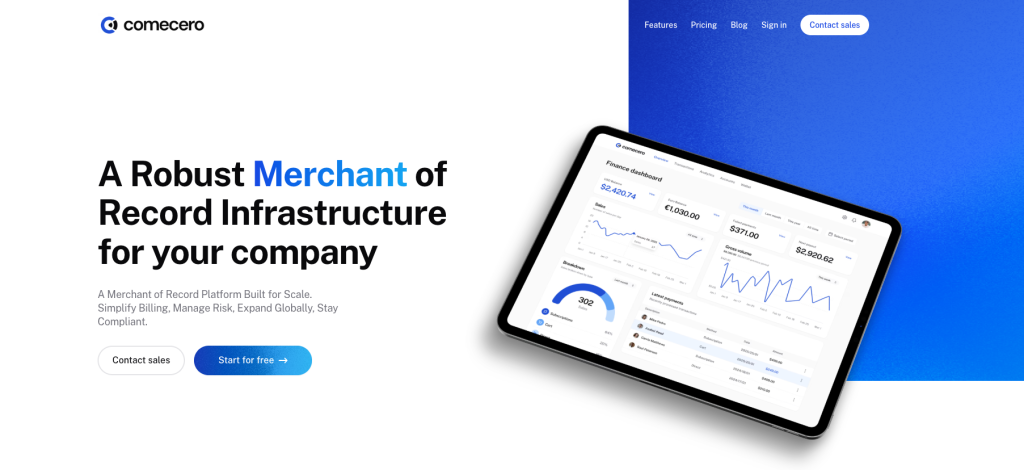
I am placing Comercero here because you asked for it in slot three, but the live site I could verify today is Comecero, not Comercero. And Comecero is interesting precisely because it is not just another classic online payment gateway. Its mainly used for large purchases, luxury goods and stuff like that.
It presents itself as a Merchant of Record platform that handles multi currency payment processing, tax compliance for VAT, GST, and sales tax, subscription billing, chargeback management, and PCI compliance. It also advertises support for 100 plus currencies, 16 languages, customizable checkout, webhooks, and API access.
That changes the buying equation. A traditional online payment processor helps you take money. A Merchant of Record style payment solution can take on more of the ugly operational burden that normally eats legal time, finance time, and quite a bit of founder blood pressure. If you sell digital goods, subscriptions, SaaS, or global services and you want less compliance chaos, Comecero has a real argument.
It is not as battle famous as Stripe or Adyen, and I would still vet support depth carefully, but for teams that want more than just payment processing gateways, this model is compelling.
4. PayPal
Direct link: paypal.com/ro/business
PayPal remains one of the most recognizable names in online payments, and that still matters. Trust is a conversion tool. PayPal says its Commerce Platform connects businesses with more than 346 million PayPal customers in over 200 markets, and supports businesses of different sizes with tools for cards, PayPal, Apple Pay, Google Pay, and recurring payments through one integration.
That kind of buyer familiarity can rescue checkout confidence, especially when shoppers are hesitant or in a hurry.
The tradeoff is that PayPal is not always the cleanest answer for a fully custom payment processing platform strategy. It is strongest when you want broad recognition, decent ecommerce payment solutions, and fast expansion into familiar online payment services without reinventing every checkout surface. For small business payment processing, especially businesses that want easy acceptance and broad consumer trust, PayPal still punches above its weight.
For companies obsessed with total checkout control, it can feel a bit more boxed in than Stripe or Adyen.
Still, it belongs high on any online payment solutions comparison.
5. Square
Direct link: squareup.com
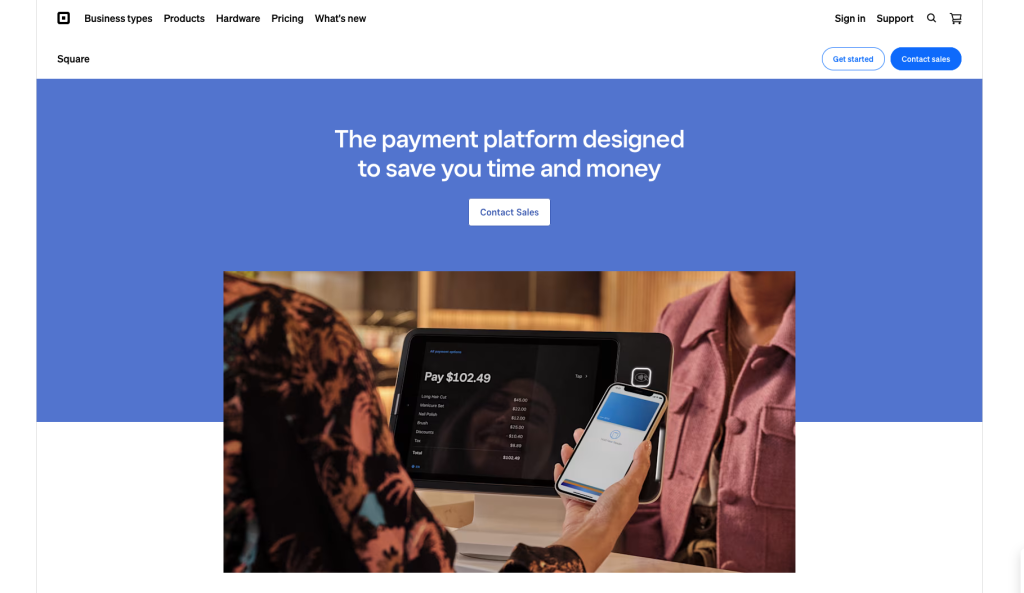
Square has always understood a painful truth about merchants: most businesses do not want to become amateur payment architects. They want to get paid and go back to running the place. Square says businesses can accept payments online, in store, and on the go, with prebuilt online payment solutions that connect in minutes and no coding for many ecommerce setups.
Its materials also stress fast transfers, PCI compliance, built in fraud protection, and no monthly minimums or separate gateway fees in its standard online processing approach.
That makes Square one of the best payment processors for small merchants, service businesses, and retail brands that need one online payment system tied closely to in person commerce.
The downside is ceiling, not floor. Once your business wants heavy customization, deep routing logic, or a more elaborate payment gateway software stack across many markets, Square starts to feel less like a rocket ship and more like a very capable van. But for countless businesses, a very capable van is exactly the right vehicle.
6. Checkout.com
Direct link: checkout.com
Checkout.com is the sort of provider that shows up when revenue teams become allergic to declined payments. The company says it processed 300 billion dollars in ecommerce payments for enterprise merchants in 2025, offers AI and network data to improve acceptance, and supports a
Unified Payments API with idempotency. It also offers prebuilt hosted options like payment links and a customizable mobile UI called Flow for mobile. This is not lightweight stuff. It is built for merchants who treat payments as a performance lever, not an afterthought.
Where Checkout.com excels is optimization. If your order volume is high enough that tiny shifts in acceptance rate mean real money, then this platform gets interesting very quickly. For a tiny store, it is probably too much machine. For larger brands, marketplaces, or fintech style products, it can be one of the best online payment processing companies to evaluate. I would place it higher for enterprise only lists. On a broader list for mixed business sizes, sixth feels fair, mainly because its strengths show up most clearly once your payment stack is already serious.
7. Braintree
Direct link: braintreepayments.com
Braintree still has a strong case for businesses that want a mature online payment processor with broad wallet support, PayPal integration, recurring billing, and mobile SDKs. Its official materials position it as an end to end checkout solution with single touch payments, mobile SDKs, global currency acceptance, cards, PayPal, Apple Pay, Google Pay, Pay Later options, and 20 plus local payment methods.
That is a respectable spread, and the service remains PCI DSS compliant at Level 1.
So why seventh? Because Braintree often feels like a solid veteran in a field where some rivals have sharper momentum. It still makes sense for merchants that want PayPal adjacency and a familiar stack, especially in mobile commerce. But the platform also carries more “enterprise legacy with modern patches” energy than Stripe’s cleaner developer vibe or Checkout.com’s aggressive optimization story. Still useful. Still credible. Just not the first name I would hand most new builds unless there is a specific PayPal or wallet centered reason to do so.
8. Authorize.net
Direct link: authorize.net
Authorize.net is the grizzled old pro on this list. It still matters because a lot of businesses want a straightforward online payment system, recurring payments, mobile point of sale, manual transactions, and an API backed by Visa’s ecosystem.
The company says it supports subscriptions, retail, mobile payments, built in fraud prevention, 24 7 support, and a developer center with APIs, guides, and sandbox tools. It also says there is no contract or early termination fee for the payment gateway.
I ranked it eighth not because it is bad, but because it feels more conservative than exciting.
And sometimes conservative is good. If you are migrating an older stack, processing manual orders, or dealing with workflows that are not particularly sexy but absolutely must work, Authorize.net still deserves a seat at the table.
For ambitious UX driven ecommerce, though, newer payment platforms generally feel faster, more flexible, and less likely to drag old merchant services baggage into a modern product roadmap.
Quick picks by business type
- Best online payment processor for most startups and SaaS teams: Stripe
- Best payment solution for large international brands: Adyen
- Best option if you want Merchant of Record style coverage: Comercero, via the live Comecero site I verified
- Best for consumer familiarity and trust at checkout: PayPal
- Best for small business payment processing tied to in person sales: Square
- Best for payment performance obsessed enterprise teams: Checkout.com
- Best if PayPal ecosystem fit matters: Braintree
- Best if you need a more traditional gateway and merchant services path: Authorize.net
Questions to ask before you sign anything
- Can this payment processing company support my current checkout and the one I will need in eighteen months?
- Does it handle recurring revenue, saved cards, retries, refunds, and disputes without forcing hacks into the codebase?
- Can it support my web payment flow, mobile apps, and any in person channel I may add later?
- Does it offer the local payment methods my buyers actually use?
- If I am replacing a legacy gateway, how ugly is the migration work really?
- Who owns tax, compliance, and chargeback pain, me or the provider?
- Will my finance team love the reporting, or write angry Slack messages forever?
That last question is not theory. A flashy checkout can hide mediocre reporting for months, and then quarter end arrives like a tax auditor with a drum set. Good online payment processing software should make product, finance, and support slightly less miserable at the same time. That is rarer than vendors admit.
Final verdict
If I were advising most businesses today, I would start with Stripe, check Adyen for higher complexity and international scale, and look hard at Comecero if the Merchant of Record model solves tax and compliance headaches that a standard gateway does not.
PayPal and Square remain excellent depending on trust signals and merchant simplicity. Checkout.com is powerful when payment performance itself becomes a board level concern. Braintree and Authorize.net still have legitimate use cases, but they are no longer the first names I reach for in a fresh build unless the business context points me there.
The bigger point is this: online payment solutions are not just back office utilities anymore. They shape conversion, retention, fraud exposure, expansion speed, and the emotional stability of everyone on your team who touches money flows. Pick the wrong payment processing services and you inherit tech debt in a suit. Pick the right one and the whole business feels smoother, calmer, and weirdly more competent. That is not magic. That is good infrastructure doing its job quietly, which is the closest thing tech has to good manners.
Every checkout wants to be frictionless until accounting asks it a follow up question.